
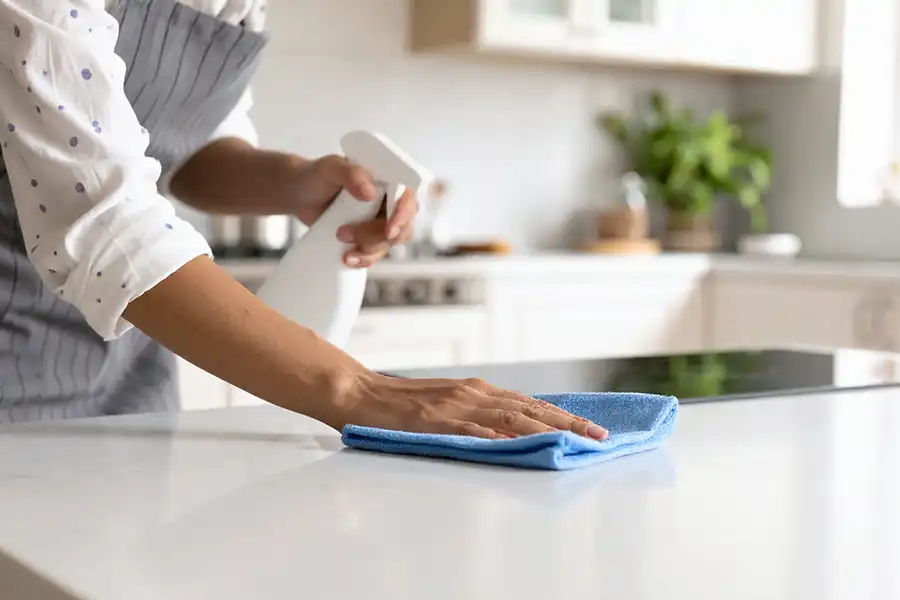
Spring is the perfect time to refresh your home—starting with your countertops. After months of winter weather, indoor cooking, and seasonal messes, your surfaces deserve a little extra attention. Below, we’ll walk you through effective spring cleaning tips and countertop care strategies to help your kitchen look its best and protect your investment. If you ever need professional help, callRay’s Countertop Shop, Inc. today!
Why Spring Cleaning Matters for Countertops
When the seasons change, humidity shifts and residue from winter use often builds up in microscopic cracks or seams. Without proper maintenance, dirt and grime can dull finishes or penetrate more sensitive materials. Regularly cleaning countertops with gentle, non-abrasive solutions restores their appearance and prevents long-term wear. Also, by addressing small issues like chips or weak seams early, you can extend the life of your surfaces and maintain their beauty. Think of your countertops as high-traffic surfaces—they deserve seasonal care just as much as your floors or walls.
How to Clean Different Countertop Materials
Different countertop surfaces require different approaches.
Below is a guide to caring for common materials in your kitchen:
Quartz and Solid Surface
These non-porous materials are fairly forgiving. Use warm water and a mild, pH-neutral dish soap. Avoid harsh or acidic cleaners (like bleach or vinegar). For stubborn spots, a soft sponge or non-abrasive pad works well. Avoid using scrapers that might scratch the finish. With quartz and solid surface materials, regular wiping and prompt cleanup of spills go a long way toward maintaining their appearance.
Granite
Granite is more forgiving of heavier cleaning, but you’ll want to use a gentle stone cleaner or a diluted dish soap solution. Avoid acids or abrasive powders. After cleaning, dry with a soft cloth to prevent water spots. Re-seal the surface if recommended by the manufacturer or installer (often once a year or every few years, depending on use). Proper sealing helps prevent stains and liquid intrusion into the stone.
Laminate
Modern laminate is much more durable than earlier versions, but it still has a protective top layer you’ll want to preserve. Use mild dish soap and water or manufacturer-approved cleaners. Avoid harsh chemicals, excessive moisture at seams, or sharp scrapers. With laminate, consistent, gentle cleaning is usually enough to keep it looking good.
Deep Cleaning Steps for Your Spring Routine
When it’s time for your seasonal deep clean, following a structured process ensures every surface is properly cared for. Taking the extra time to clean thoroughly not only keeps your kitchen looking great but also helps prevent long-term damage and preserves the life of your countertops and fixtures.
- Clear the countertop — Remove all items, appliances, or decorations so you can reach every inch.
- Dust and sweep — Use a microfiber cloth to catch loose crumbs or grit that could scratch surfaces.
- Apply cleaner — Mist your chosen cleaner over the surface. Work in small sections and wipe with a soft cloth.
- Address grout or seams — Carefully clean any seams or backsplash joints with a soft brush and mild solution.
- Rinse and dry — Even after cleaning, a final wipe with a damp cloth, then a dry microfiber, prevents residue.
- Inspect for damage — Look closely for chips, cracks, or weakening seams. Note any areas that may need repair.
Doing this deep cleaning once a year (or more often if your kitchen sees heavy use) helps maintain both the appearance and durability of your kitchen.
Preventing Damage During Spring Cleaning
Spring cleaning often inspires a “scrub everything” mindset—but countertops require a bit of care to avoid damage during that process. Even the most durable materials can lose their luster when cleaned improperly. The key is understanding what your surface can (and can’t) handle.
Avoid using harsh abrasives, steel wool, or scouring pads on any countertop, as these can dull finishes or cause fine scratches that collect dirt over time. For quartz countertops, steer clear of bleach or ammonia-based products, which can break down the surface’s resin binder. Granite and solid surface materials can also be sensitive to acidic cleaners like vinegar or lemon juice—those can eat away at sealants and leave dull spots.
If you’re using multipurpose cleaners in the kitchen, always check the labels to ensure they’re safe forcountertops. When in doubt, test a small, inconspicuous area first. Protecting your investment during cleaning keeps your kitchen looking new for years to come.
Everyday Habits to Keep Countertops Pristine
Beyond the annual spring regimen, daily habits play a huge role in maintaining the beauty and longevity of your countertops. Consistent, mindful care prevents minor issues from turning into costly repairs, keeps surfaces hygienic, and helps retain the original finish and luster. By incorporating a few simple routines into your everyday kitchen use, you can protect your investment and enjoy a clean, attractive workspace for years to come.
Here are a few practical habits to adopt:
- Wipe up spills quickly, especially of acidic liquids like citrus or soda
- Use cutting boards, trivets, or pads to protect surfaces from knives and hot pans
- Avoid dragging heavy or abrasive items across the countertop
- Use coasters under mugs or glasses to prevent moisture rings
- Clean each day rather than letting residue build up
These small steps may seem simple—but they add up to preserving the finish, preventing stains, and minimizing wear over time.
The Role of Sealing and Finishing in Countertop Maintenance
One of the most overlooked parts of countertop care is maintaining a proper seal or finish. While non-porous materials like quartz and solid surface don’t require sealing, natural stone countertops—especially granite—rely on sealant layers to protect against stains, moisture, and bacteria. Without regular sealing, everyday liquids like coffee, oil, and juice can seep into the stone’s pores, causing discoloration.
To test if your granite needs sealing, sprinkle a few drops of water on the surface. If it darkens within a few minutes, it’s time for re-sealing. Most granite countertops need to be sealed once every one to three years, depending on usage and cleaning frequency. Always use a high-quality sealer recommended for your specific stone type.
Even laminate surfaces benefit from the gentle maintenance of their topcoat. While they don’t require sealants, using the right cleaners helps preserve the protective finish that prevents peeling or fading. Proper sealing and finishing practices protect your countertops and make future spring cleaning even easier.
Troubleshooting and When to Call a Pro
Even with proper maintenance, counters can show signs of wear, such as discoloration, hairline cracks, loose seams, or chipped edges. If you spot issues you can’t safely fix (or that may worsen), it’s best to call in professionals. Ray’s Countertop Shop, Inc. specializes in seam repairs, edge refinishing, and the replacement of countertops. For any stubborn stains or defects, reach out—we’ll help restore your surface to its best condition. Contact our team today for expert advice and professional service.
Contact Our Team for Exceptional Service
Your countertops deserve care tailored to their material, and a good spring cleaning can go a long way in preserving their life and beauty. Combine regular daily upkeep with a thorough seasonal deep clean—and watch your kitchen shine.
If you’re in Central IL and you want expert guidance or repair work—call Ray’s Countertop Shop, Inc. today at 217.483.2514! We’ll help maintain or restore your countertops with professional care that lasts.